
From the company register and from the ordinance
The card-code rule misses Trustly, two other sections land on it
Trustly Group AB appears in the company register of Finansinspektionen as a payment institution with 5 permissions, the oldest dated 13 July 2018. One of them is payment initiation, and that technique falls outside the rule about card purchases.
| Operator | Licence | Coins | Before ID check | Open |
|---|---|---|---|---|
| Rocketpot | Curacao | 13 | US$2,500 | Go to the casino siteRead |
| Bitcasino.io | Curaçao Gaming Authority | 12 | 2,500 EUR | Go to the casino siteRead |
| Wild Fortune | Anjouan Gaming Board | 10 | case by case | Go to the casino siteRead |
| DuckDice | Anjouan Gaming Board | 10 | case by case | Go to the casino siteRead |
| Empire.io | Anjouan Gaming Board | not read | 2,000 USDT | Go to the casino siteRead |
| Metaspins | Curaçao Gaming Authority | 9+ | case by case | Go to the casino siteRead |
| Rainbet | Anjouan Gaming Board | 9+ | case by case | Go to the casino siteRead |
| Wild.io | Curaçao Gaming Authority | 12 | case by case | Go to the casino siteRead |
| Wolf.bet | Government of the Autonomous Island of Anjouan, Union of Comoros | 32 | case by case | Go to the casino siteRead |


What the register actually says
Finansinspektionen, the Swedish Financial Supervisory Authority, keeps a public company register, and Trustly Group AB appears there with corporate identity number 556754–8655 and institution number 45002. The firm type is payment institution. Read on 1 September 2026, the entry contains five permissions:
- execution of payment transactions, from 13 July 2018,
- money remittance, from the same date,
- payment initiation services, from the same date,
- account information services, from the same date,
- execution of payment transactions through a credit line, from 2 September 2020.
That a company appears in that register means it is under Swedish supervision for its payment services business. It says nothing about which merchants the company has, and the register lacks such a list.
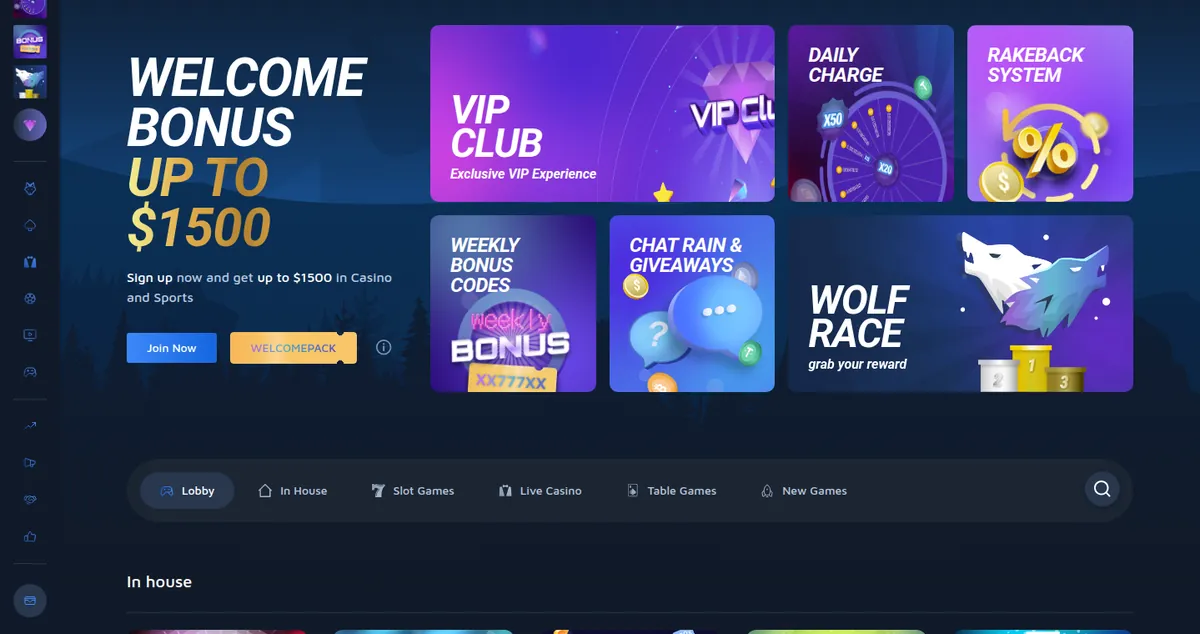
One of the two longest coin lists in the table: thirteen coins, with usdt and usdc among the six given prominence. We read the permit number ALSI-132405048-FI3 here, on the operator’s own page rather than in the Anjouan register; the company behind the brand is Cipher Games Ltd.
What a payment initiation service is
The third permission describes the product. A payment initiation service is defined in 1 kap. 2 § of lagen (2010:751) om betaltjänster, the Payment Services Act, as
a service to initiate a payment order at the request of the payment service user from a payment account held with another payment service provider.
The money therefore leaves the payer’s own bank account after a log-in at the payer’s own bank. A card is uninvolved in the chain, and that has a consequence most summaries of the subject miss.
Which is why the card-code rule is the wrong answer to the question
13 kap. 1 § of spelförordningen (2018:1475), the Gambling Ordinance, reads:
Payment service providers under the Payment Services Act (2010:751) shall refuse payment orders where a payment card is used and authorisation takes place through the use of the merchant category code (MCC) 7995.
The obligation is tied to two things at once: that a payment card is used, and that authorisation takes place under a particular merchant category code. An account-initiated transfer fails both. The rule therefore settles nothing about this payment route, and the usual formula that everything was blocked in 2023 rests on the wrong provision — the one that actually concerned blocking was repealed that same year, which is set out on the page about what the statute says.
The two sections that do reach account payments
Two provisions in the same chapter are drafted without a card. The first is 13 kap. 1 a §:
A payment service provider … shall, at the request of Spelinspektionen, as soon as possible supply available information on account numbers, names, merchant IDs and acquirer IDs used in the transmission of stakes or winnings to or from a gambling business without the licence required under the Gambling Act (2018:1138).
Account numbers are named before merchant IDs here, and every part of the sentence works without a card. The second is 13 kap. 1 c §, which obliges Spelinspektionen to keep all payment service providers informed of injunctions and prohibitions under 18 kap. 23 § of spellagen against companies that provide gambling without the required licence or that provide payment solutions for the gambling industry.
A payment institution can therefore itself be the addressee of an injunction, rather than only whoever runs the gambling. Add 19 kap. 2 § of spellagen, which penalises promotion of participation in unlicensed gambling with a fine or imprisonment for at most two years, and the picture is something other than a technical block: it consists of a duty to supply information, injunctions and a criminal provision, all aimed at companies.
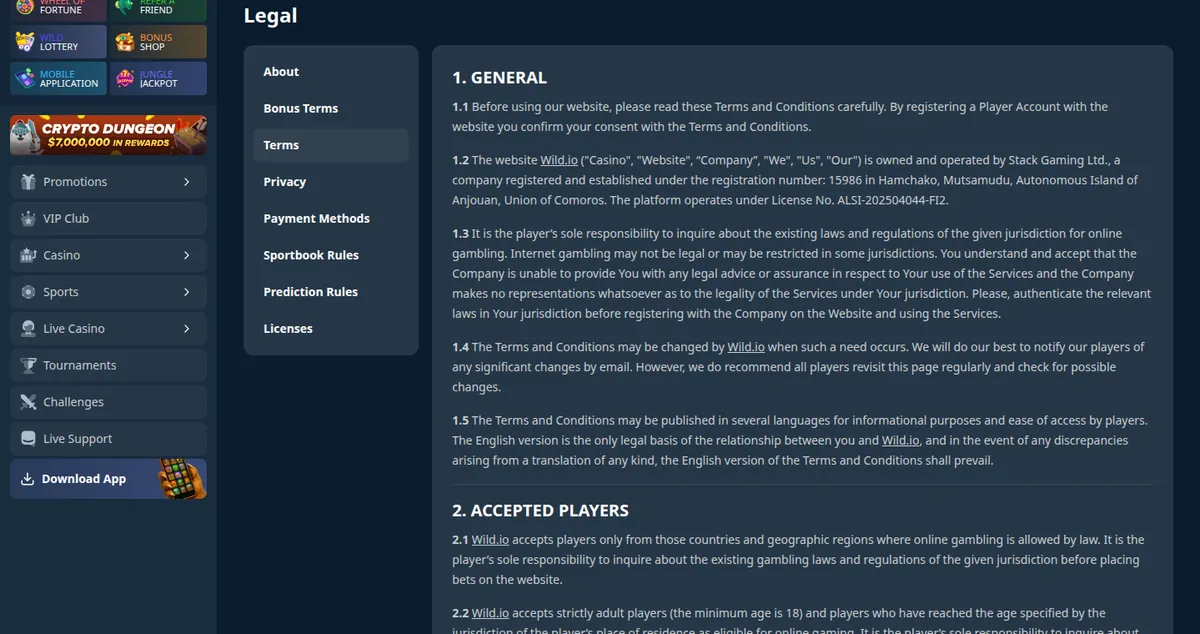
This is where the withdrawal cap of 100,000 USD per week in clause 9.6 comes from. We found the permit number OGL/2024/210/0198 in the Curaçao certificate register, and the company on the permit is Nonce Gaming B.V.
Why Trustly is bound up with the Swedish licence from the start
The link between this payment route and Swedish gambling sites is hardly an accident, and it has a statutory provision behind it. 12 kap. 2 § requires the licensee to verify the player’s identity in a satisfactory manner through a reliable electronic identification, and 12 kap. 4 § adds that play must wait until identity has been established.
A log-in at one’s own bank does two things at once in that context: it moves the money and it ties the account to an identified person. An account at a licensee is therefore quick to open and identified from the start. What other duties the licence brings with it — a gambling account, a deposit limit, a bonus only on the first occasion — is on the page about online casinos.
At an operator without a Swedish licence none of those sections applies. There the identity check sits at an amount or at the operator’s own discretion rather than before the first stake, which is the most practical difference between the two kinds of account and is set out on the page about identity checks and withdrawals.
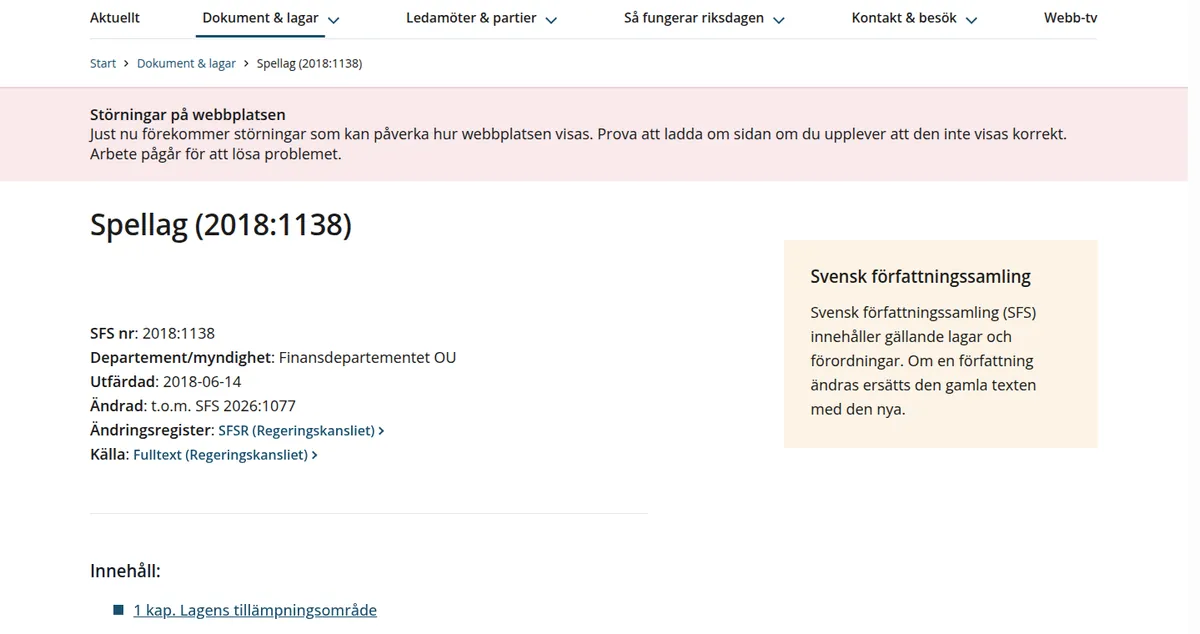
The text we worked from is the consolidated wording under SFS 2026:90, in force since 1 May 2026. This is where Chapter 19 on unlawful gambling operations sits, together with 14 kap. 12 § on self-exclusion and the two repealed sections in Chapter 18.
The dates in the register entry say something about the order of events
Four of the five permissions carry the same date in the summer of 2018, and the fifth 2 September 2020.
Hold that first date against the Gambling Act. The Act was passed in 2018 and entered into force on 1 January 2019, that is, nearly six months after the payment institution obtained four of its five permissions. The payment route was in other words in place before the Swedish licensed market opened, and the permissions were issued for payment services generally rather than for the gambling industry, and they name zero sectors.
That is the same observation the register gives elsewhere. The entry describes what the institution may do rather than who it does it for.
Three Swedish payment routes, three different sets of rules
What tends to get lumped into one question is in fact three, and they are settled by three separate texts.
Cards. 13 kap. 1 § of the Gambling Ordinance obliges payment service providers to refuse payment orders in which a card carries the payment and authorisation runs under code MCC 7995. The rule sits in a statute, bites on a merchant category code and carries an express exception for businesses with a licence or free of the licence requirement.
Swish. Here a statutory provision is missing. What closes the route is a clause in the bank’s general terms for Swish Handel, that is, a contract between the bank and its business customer, and the clause points expressly at gambling lacking the necessary Swedish permits. The wording is on the page about Swish.
Account initiation. The subject of this page. A merchant code is uninvolved, and a provision refusing the payment order is missing. What remains is the duty to supply information in 13 kap. 1 a §, the information channel in 1 c § and the promotion offence at 19 kap. 2 § — three rules aimed at companies, none at an individual payment.
Three routes, three sets of rules, three different answers. The usual summary treats them as one and the same, which is why it lands wrong in two of the three cases.
The text we worked from is the consolidated wording under SFS 2026:90, in force since 1 May 2026. This is where Chapter 19 on unlawful gambling operations sits, together with 14 kap. 12 § on self-exclusion and the two repealed sections in Chapter 18.
What the register leaves out
The company register answers one question and only that one: who is under supervision for their payment services business, with which permissions and since when.
It lacks a list of merchants. The question whether a particular gambling operator accepts a particular payment method therefore cannot be answered from the register, and the operator’s terms fail to answer it in every one of the ten cases we read — none of them names the method.
We have left the payment institution unasked, and we reproduce zero summaries from another site. What is left is a confirmed register position on one side, silence in ten sets of terms on the other, and a missing bridge between them. Building such a bridge with words like “usually” or “generally” would be writing an assumption that looks like a fact.
What the ten operators' terms mention about the payment route
Our material lacks a field for payment methods, and none of the notes we took from the ten sets of terms mentions Trustly. That means the document says nothing on the point, which is something other than the method being absent.
What is written down is this. Metaspins writes in clause 12.5 that the maximum withdrawal amount may be limited depending on the payment method chosen, which is to say that there are several and that they are treated differently. DuckDice keeps a separate country list for card payments on fiat withdrawals, distinct from the account’s blocking list. Wild Fortune leaves the maximum per method unstated and lists its monthly cap in six currencies, none of them Swedish kronor. And for Wild.io we noted a route into fiat through the exchange service Changelly.
Three of the ten carry the tag crypto-only in our material: Rocketpot, Metaspins and Wolf.bet. That tag is our own summary rather than a quotation, and the Wild.io note above shows why such a label fails as evidence in either direction.
What this page stops short of claiming about individual operators
Nowhere here does it say that a particular one of the ten would accept Trustly, or that any of them would refuse it. Such a statement would have been taken from another comparison site, and that is precisely what the method on the page about how we read the documents rules out.
What can be documented with figures points somewhere other than kronor. Seven of ten publish a coin list, from eight coins at Metaspins to thirteen at Rocketpot and Wolf.bet, and every published amount in our material is stated in USD, EUR or USDT.
Where you can read it for yourself
The company register of Finansinspektionen is open and searchable by institution number or corporate identity number, and the entry shows the permissions with the start date of each. The Gambling Ordinance and the Gambling Act are both in the statute book at riksdagen.se, with an amendment history per section.
Our reading was made on 1 September 2026 for statutes and registers, and on 26 August 2026 for the operators' terms. What the word foreign settles in this context is taken up on the page about offshore operators.